SellSEO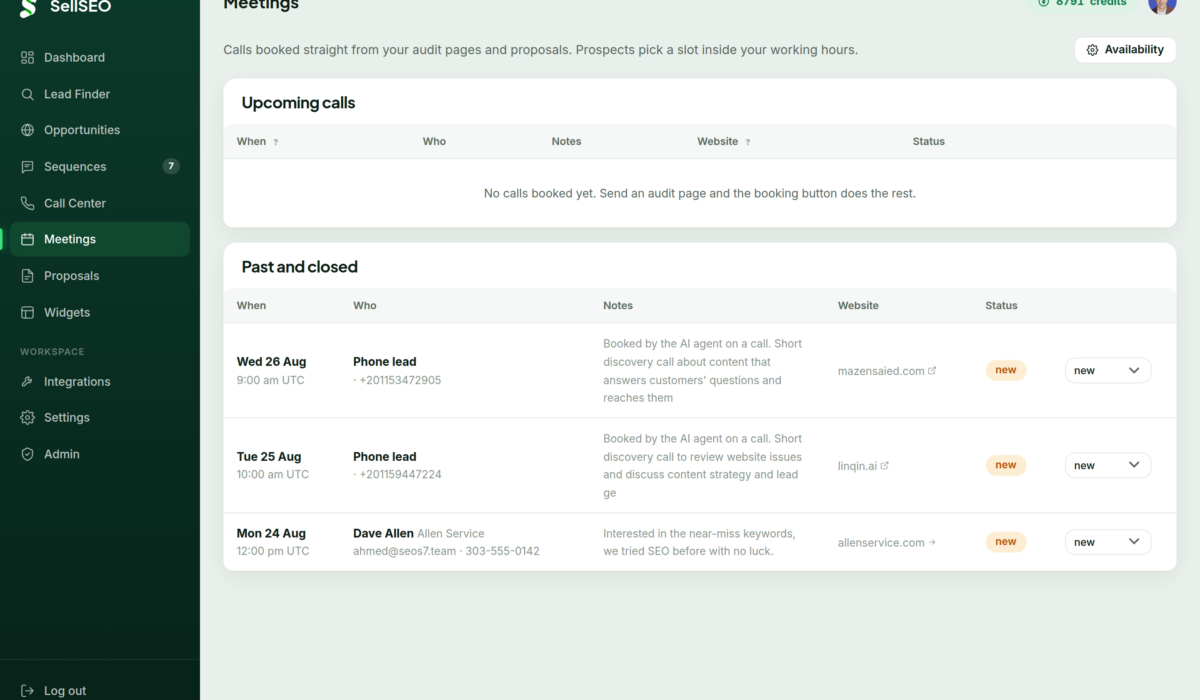
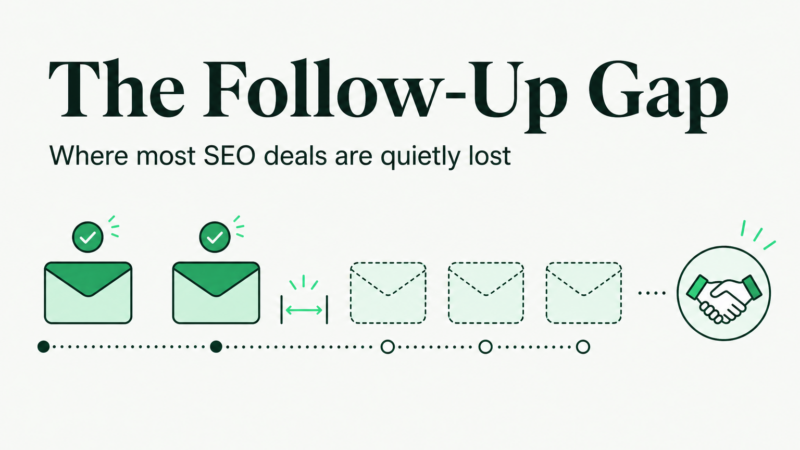
The gap between a prospect deciding you might be worth talking to and a meeting actually existing is where most deals quietly die. Not because the prospect said no, but because the next step was “reply to this email and we will find a time”, and that is three days of latency during which the problem stops feeling urgent.
Put the slot picker on the evidence
The moment somebody is most likely to book is while they are reading the thing that convinced them. Not later, in their inbox, among forty other things.
So the picker belongs on the audit report and on the proposal, on your branding and your own link, rather than on a separate scheduling page they have to be sent to.
Set it once
Working hours, meeting length, and how much notice you need. That is the whole configuration, and it takes about a minute.
Be honest about the notice window. Setting it to two hours because you want to seem responsive produces bookings you are not ready for, and a badly prepared first call is worse than one scheduled for Thursday.
What a booking should trigger
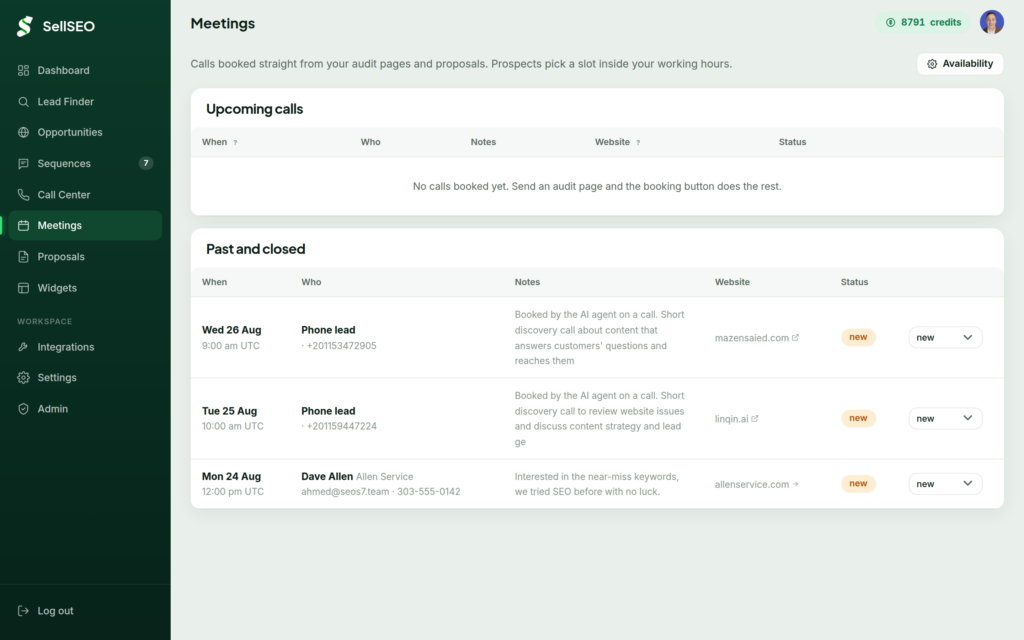
A confirmed booking is not just a calendar entry. It should stop the outreach sequence, appear in your meetings screen, and move the business along the pipeline on its own.
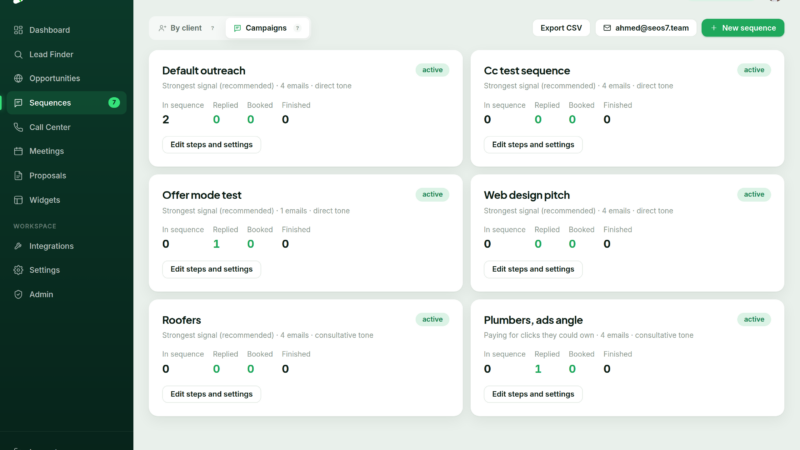
If those three things do not happen automatically, they eventually do not happen at all, and the prospect gets a follow-up email about a call they already booked.
Then actually prepare
Walk in with their numbers rather than a discovery script. You already have the rankings, the ad spend, the traffic trend and the competitor gap. Reading them back is a better first ten minutes than asking what their goals are.
Why a separate scheduling link loses bookings
The usual setup sends the prospect somewhere else: a third party scheduling page, different branding, a fresh set of questions to answer. Every one of those is a moment to reconsider, and interest does not survive many of them.
Putting the picker on the report and on the proposal removes the transition entirely. The prospect is convinced and the next action is right there, in the same page, on your branding, while the argument is still fresh.
Setting availability you can actually honour
Two settings decide whether bookings are useful or disruptive. Meeting length should reflect the conversation you actually intend to have, which for a first call is usually 20 or 30 minutes rather than an hour. Notice period should be long enough that you can prepare properly.
The temptation is to set notice to a couple of hours to seem responsive. That produces calls you walk into cold, and an unprepared first call is considerably worse than one on Thursday. A day of notice is a reasonable default.
Block the hours you do other work. A booking page that offers your entire week will fill your entire week.
What should happen automatically when somebody books
Three things, and if any of them requires you to remember, it will eventually not happen. The outreach sequence must stop, so the prospect does not receive a follow-up about a call they have already booked. The meeting must appear where you look for meetings. And the business must move along the pipeline so your view of live conversations stays accurate.
The failure mode here is specific and embarrassing: an automated follow-up arriving after a booking tells the prospect that nobody is actually paying attention, and they will read everything else you have said in that light.
Preparing for the call the evidence booked
You already have their rankings, their ad spend, their traffic trend and the competitor taking their traffic. Open with those rather than with discovery questions.
Asking a prospect what their goals are, when you have already published a report about their specific search gap, wastes the credibility the report earned. Read the numbers back, ask whether they recognise the picture, and let the conversation go from there.
Frequently asked questions
Where should an SEO consultation booking page live?
On the artefact that creates the interest, which is the audit report and the proposal, rather than on a separate scheduling site. Every navigation step between deciding and booking loses a proportion of the people who were ready.
How long should a first SEO consultation be?
Twenty to thirty minutes is usually right for a first conversation. It is long enough to walk through the findings and short enough that a busy owner will agree to it without treating it as a commitment.
How much notice should I require for bookings?
At least a day. Shorter notice periods look responsive and produce calls you are not prepared for, and preparation is the entire advantage you have when you already hold the prospect data.
What happens to my outreach sequence when somebody books?
It stops immediately. Follow-up arriving after a booking signals that nothing is being supervised, and it undermines the impression of competence the report created.
Do prospects need an account to book?
No. They pick a slot on the page they are already reading, and the confirmation goes to both sides.
Related reading
- White Label SEO Audit Reports You Can Send in One Click
- SEO Proposal Software: Stop Retyping Their Numbers Into a Template
- AI Sales Call Software: Phoning SEO Leads Without Doing It Yourself
- How to Find SEO Leads That Are Provably Losing Money
See the full feature: Meeting Booking.