SellSEO
 SellSEO
A ten-person SEO agency spends roughly 60 percent of its billable hours on work no client ever sees: pulling rankings into a spreadsheet, rerunning a crawl, formatting a monthly report, researching a prospect before a call, writing the same proposal for the fourth time this month with different numbers pasted in. That is the real market for SEO automation tools, and it is why every list of them should be sorted by hours saved rather than by feature count.
So that is how this one is sorted. Six categories of tool, each described by the task it removes from an agency week, how many hours that task usually costs, and the honest limit of what the software can do without you. No vendor rankings, because the right tool in each category depends on your stack, but enough detail that you will recognise the category you are missing.
1. Lead finding: the eight hours nobody bills
The task. Deciding who to pitch this week. Done by hand, it is a Monday morning of searching Google for “plumber denver”, opening forty sites, checking who is running ads, guessing at traffic, and finding owner emails. Eight hours is a conservative estimate for a list of twenty qualified prospects, and it is eight hours of a senior person, because a junior cannot tell a good prospect from a bad one.
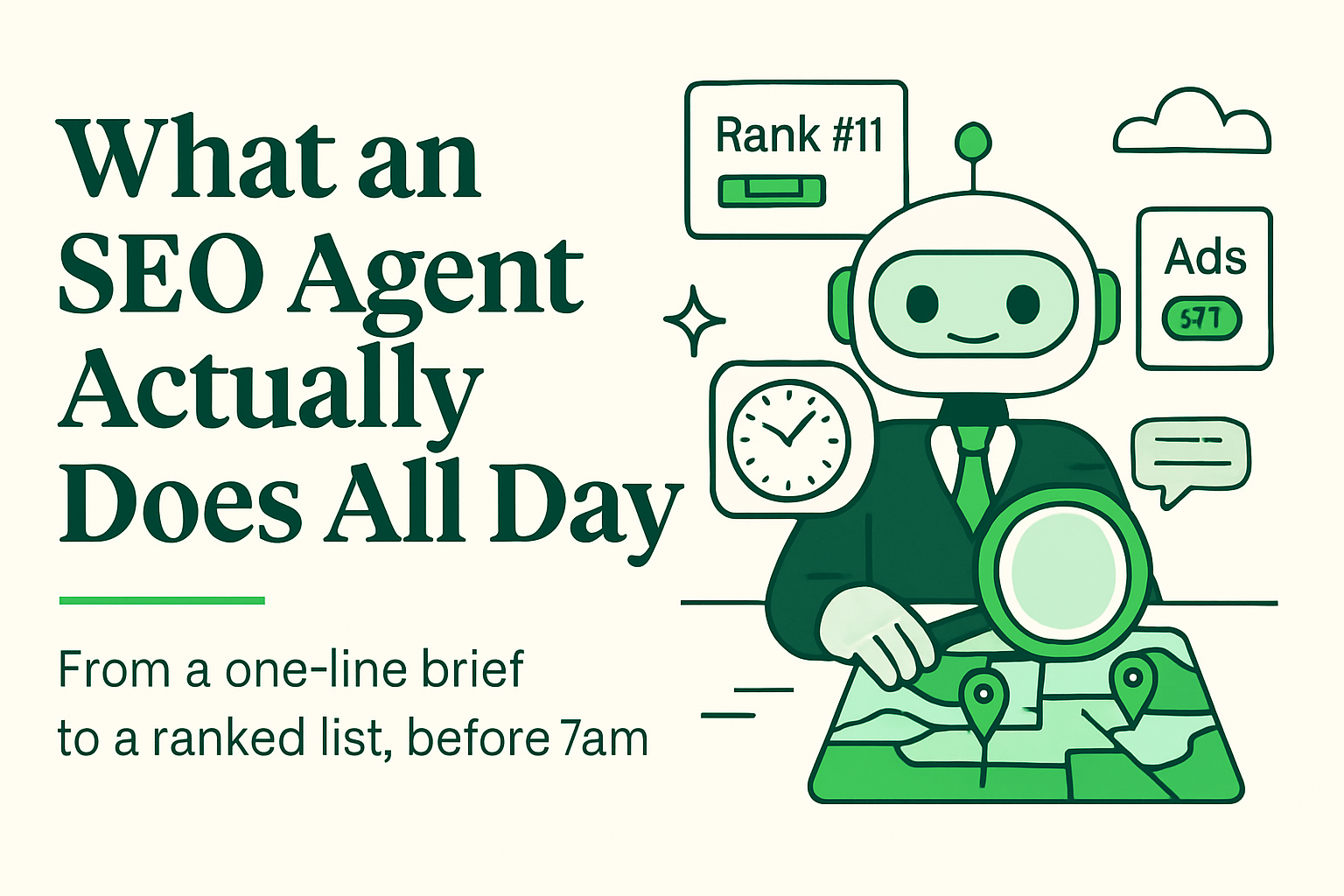
What automation does. A lead-finding tool takes a niche and a place and does the Monday for you: reads the results for a set of buyer searches, notes who is ranking and who is advertising, pulls traffic history on each business, tests whether AI assistants recommend them, and scores each one on need, budget and reachability. The output is a ranked list with the reason each business is on it. SellSEO is built for exactly this task, and it is the category most agencies have not automated at all, which is odd given it is the most expensive task on the list.
The limit. It cannot tell you that the owner is about to sell the business. It gives you the shortlist and the evidence; the judgement about who to call first stays yours.
2. Proof and proposals: the four hours per pitch
The task. Turning a prospect into a document they will read. Most agencies have a template proposal and spend two to four hours per prospect swapping in numbers, screenshots and a keyword table. Then the prospect reads page one, sees their own business described in general terms, and does not reply.
What automation does. Proposal and audit generators build the document from the prospect’s own data: the keyword they rank eleventh for, the traffic line since March, the AI answer that names three competitors instead of them, the estimated monthly cost. That is not a cosmetic difference. A template proposal closes around 15 to 25 percent; one built from the prospect’s own numbers closes around 50 to 65. White-label audit reports belong in this category too: a shareable page with your logo that proves the problem before you ask for the meeting.
The limit. The pricing and the scope are still decisions. A generator that invents a package for you is guessing at your margins.
3. Rank tracking: the daily hour that becomes zero
The task. Knowing where every client sits for every keyword, every day, and noticing when something moves. By hand this is an hour a day across a client base of fifteen, and it is the first thing that gets skipped when the week is busy, which is exactly when a client’s rankings drop and nobody sees it until the client does.
What automation does. Rank trackers check positions on a schedule, alert on movement past a threshold, and keep the history so a report can show a line rather than a number. The newer ones also track AI answers, which matters now that a growing share of “who should I hire” questions gets asked to an assistant rather than typed into Google. If a client is absent from the AI answer for their own niche and city, that is a ranking problem your tracker should be able to show.
The limit. A tracker tells you what moved. It does not tell you why, and the “why” is the part the client is paying you for.
4. Technical audits: the crawl you stop running by hand
The task. Finding broken pages, slow templates, missing tags, duplicate titles, redirect chains, and the hundred other things that quietly suppress a site. A manual audit of a 500-page site is a day; a 5,000-page site is a week.
What automation does. Crawlers do this on a schedule and diff the results, so you see what broke since last time rather than the whole list again. The good ones prioritise by impact instead of by count, because a client does not care that there are 340 images without alt text; they care that their highest-earning page takes nine seconds to load on a phone.
The limit. Fixing. The crawl finds the problem; a developer, or a very patient account manager, fixes it. Tools that promise to “automatically optimise” a site are usually rewriting title tags, which is the least valuable fix on the list.
5. Reporting: the last week of every month
The task. Building the monthly client report. Across fifteen clients this is reliably the last three working days of the month, and it is the task that account managers most consistently describe as the reason they want to leave.
What automation does. Reporting tools pull rankings, traffic, conversions and the work log into a template and send it on a schedule. The hours saved are real and large. The catch is that an automated report is only as good as the numbers it leads with. A report that opens with sessions and impressions gets skimmed. A report that opens with the revenue at risk, the missed clicks on the near-miss keywords, and the one thing that changed this month gets read, and gets the contract renewed. Set the template up around those figures once and the automation does the rest.
The limit. The paragraph at the top that says what happened and what you are doing about it. Clients renew on that paragraph. Write it yourself; it takes ten minutes per client and it is the only part they remember.
6. Outreach and follow-up: the part where deals die
The task. Sending the first email, and then the second, third, fourth and fifth. Around 80 percent of sales need five or more follow-ups. 44 percent of sellers stop after one. By the fourth touch, 92 percent have gone. The gap between those numbers is where most agency pipelines quietly leak.
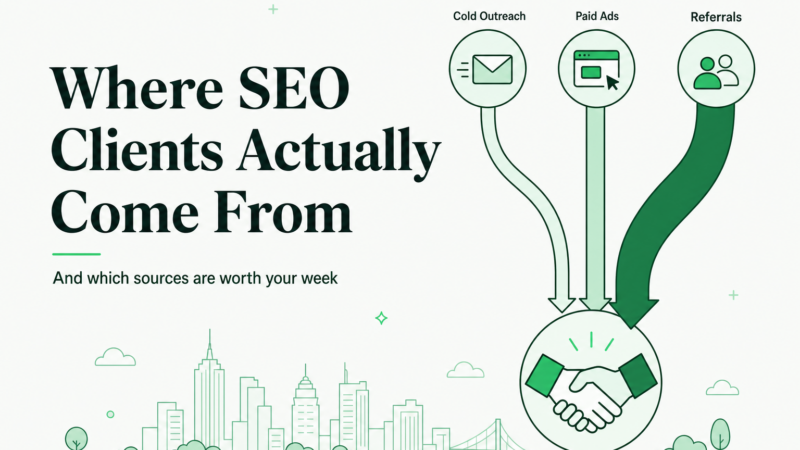
What automation does. Sequencing tools send the follow-ups on a schedule, stop when someone replies, and keep the pipeline honest about who has been contacted and when. Pair them with a lead-finding tool and the sequence can carry something new each time: a second finding, a competitor’s movement, a fresh number on the cost of waiting. That is the rule that makes persistence bearable, for you and for the recipient. AI callers sit at the edge of this category: useful for the first touch on a warm lead, confirming the right person and booking fifteen minutes, and not for the sales conversation itself.
The limit. Deliverability and taste. A sequence that sends “just checking in” five times will burn your domain and your reputation faster than doing nothing.
What the week looks like after
Add the hours up. Lead finding, eight. Proposals, four per pitch and say three pitches, twelve. Rank tracking, five. Audits, four amortised. Reporting, twenty across the month, so five. Follow-up, three. That is 37 hours a week of work that a small agency does by hand and that tools in these six categories take on. It is not zero after: the judgement calls, the paragraph at the top of the report, the sales call, the fix, those stay. But they are the parts of the job that people started agencies to do.
The order to automate in is the order above, because it is the order of hours. Most agencies have done three, four and five and not touched one and two, which is why the same agency that runs a beautiful automated report still spends Monday morning searching Google for plumbers. If that is you, run one scan on your own city and see what the Monday looks like when it arrives finished.