SellSEO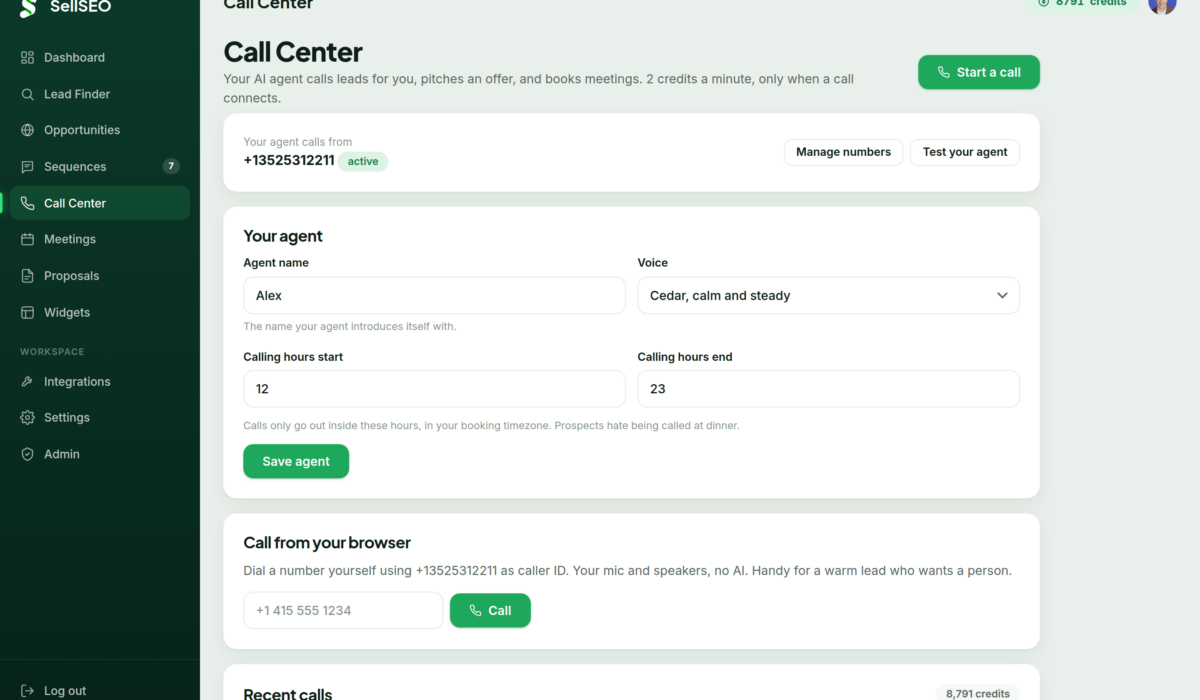
There is an uncomfortable fact underneath most SEO prospecting: the businesses easiest to sell to are the ones least likely to read email. A plumber checks messages between jobs. A dental practice has somebody answering the phone all day and an inbox nobody owns.
Calling works in those markets. Most agencies still do not do it, because calling 40 businesses is a day nobody wants.
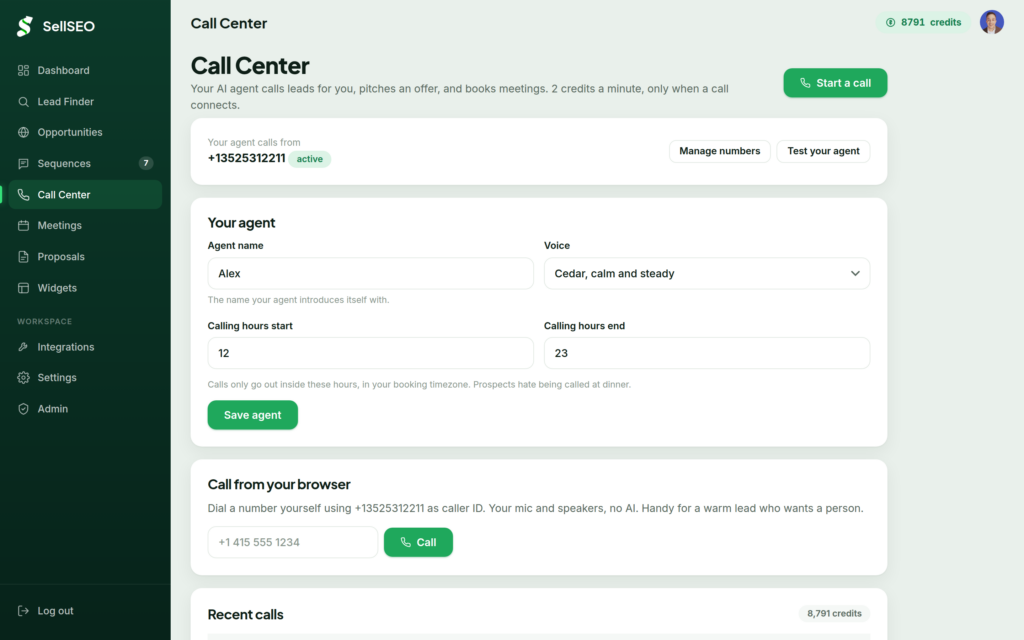
What the agent is actually for
It is not there to close. It is there to do the part that does not need you: dialling, getting past the first thirty seconds, establishing whether there is any interest at all, and booking a slot if there is.
You buy a local number from your credits, pick a voice, name the agent and set your calling hours so it never dials at dinner. The local number matters more than the voice does. An unknown out of state number gets declined before anybody hears anything.
Point it at a lead and an offer
Choose a lead from your pipeline, or type a website and a phone number. Pick the offer you want pitched, or let it aim for a follow-up meeting rather than a sale.
Aiming for the meeting is usually right. A first call that tries to close a retainer is a first call that ends early.
Read the transcript, not just the outcome
You watch the conversation build live, then read the outcome, the recording and any meeting it booked. Hot leads land in your pipeline on their own.
The transcripts are worth more than the bookings early on. Ten of them will tell you which objection keeps coming up in a market, and that goes straight back into your email copy and your proposals.
Calling is a supplement, not a replacement
Best results come from calling businesses that have already seen something from you. A prospect who opened an audit report yesterday is a warm call. A cold dial into a market you have never scanned is not.
Why calling still works in local markets
Local trades are among the last businesses where a phone call is a normal way to be contacted. A plumber expects the phone to ring. That same person may not open a marketing email for a week.
The reason agencies stop calling is not that it fails, it is that it costs a day and most of that day is dialling numbers that do not answer. Removing that cost changes the arithmetic rather than the channel.
Disclosure and staying on the right side of the rules
Be straightforward that the caller is an AI agent. Several jurisdictions now require disclosure for automated or synthetic voice calls, rules vary by state and country, and the direction of travel is clearly towards more disclosure rather than less. This is not legal advice, so check what applies where you are calling.
Beyond compliance, disclosure works better commercially than the alternative. A prospect who works out mid-call that they are talking to software feels tricked, and that is not a state anybody buys from. Told up front, most people are simply curious.
Respect do-not-call registries and keep calling hours civil. The calling hours setting exists so the agent never dials at dinner, and using it is both a legal safeguard and basic manners.
Warm calls beat cold ones by a wide margin
The best call is to a business that has already seen something from you. Somebody who opened an audit report yesterday has context, and the call becomes a follow-up rather than an interruption.
That suggests an order: scan the market, build the report, send the email, then call the businesses that opened it and did not reply. Those prospects have demonstrated interest and have not acted, which is exactly the gap a call closes.
What to do with the transcripts
Early on the transcripts are worth more than the bookings. Ten calls in one market will tell you which objection recurs, which framing produces interest, and which part of your offer confuses people.
That feeds straight back into the email copy and the proposal. Most agencies guess at objections; a stack of transcripts means you do not have to.
Frequently asked questions
What is AI sales call software?
Software that places outbound calls with a synthetic voice agent, holds a short qualifying conversation, and books a meeting when there is interest. It handles dialling and the opening exchange, which is the part that does not require you, and hands you a transcript and an outcome.
Do I have to tell people they are speaking to an AI?
Disclosure requirements for automated and synthetic voice calls vary by jurisdiction and are becoming stricter. Check the rules where you are calling, since this is not legal advice. Commercially, disclosing up front works better than being found out mid-call.
What number do the calls come from?
A local number you buy from your credits. This matters more than the voice does, because an unfamiliar out of area number is frequently declined before anybody hears anything at all.
Should the agent try to close the sale?
No. Aim for a booked meeting. A first call that pushes for a retainer usually ends early, whereas a call that asks for fifteen minutes to walk through what was found converts far better.
Which leads should the agent call?
Prospects who have already engaged, particularly anybody who opened an audit report and did not reply. Cold dialling a market you have never scanned wastes the strongest advantage you have, which is knowing something specific about their search performance.
Related reading
- Cold Email Software for SEO Agencies: Sending That Does Not Burn Your Domain
- An SEO Consultation Booking Page That Sits Where Interest Happens
- An SEO Client Pipeline That Updates Itself
- How to Find SEO Leads That Are Provably Losing Money
See the full feature: Call Center.