SellSEO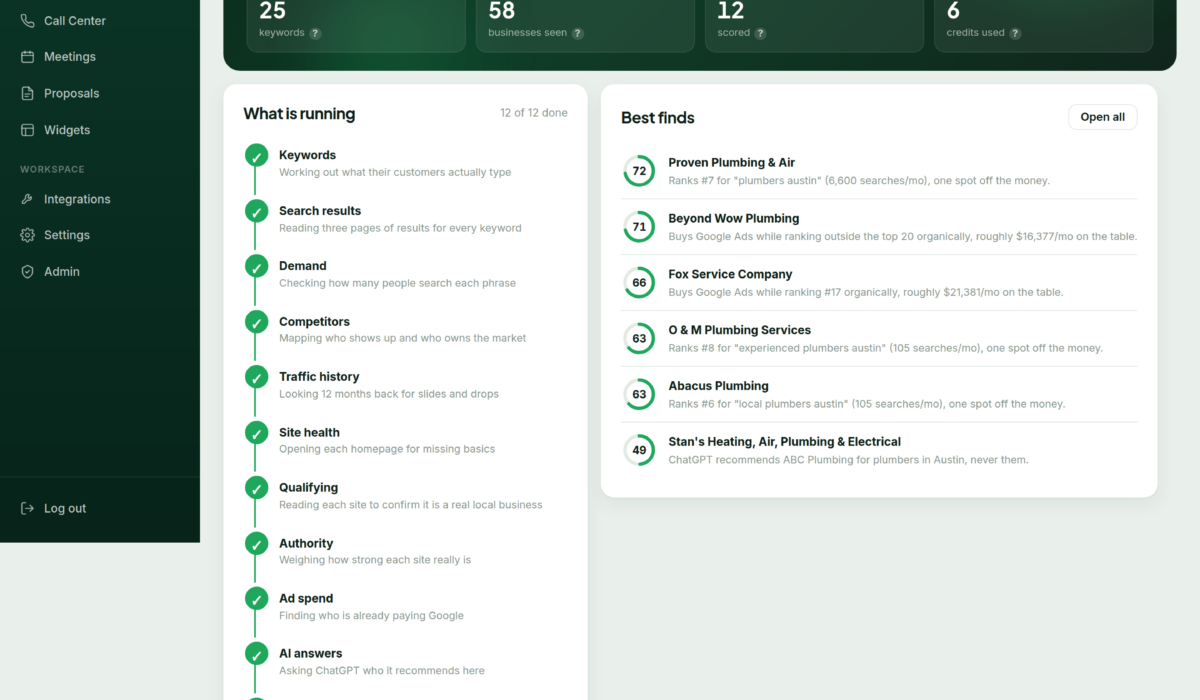
Buying a list of every plumber in a city takes ten minutes and tells you nothing. You still have to work out which of them is actually underperforming, which of them is already spending money on search, and which of them has a decision maker you can reach. That is the real work, and a list does not do any of it.
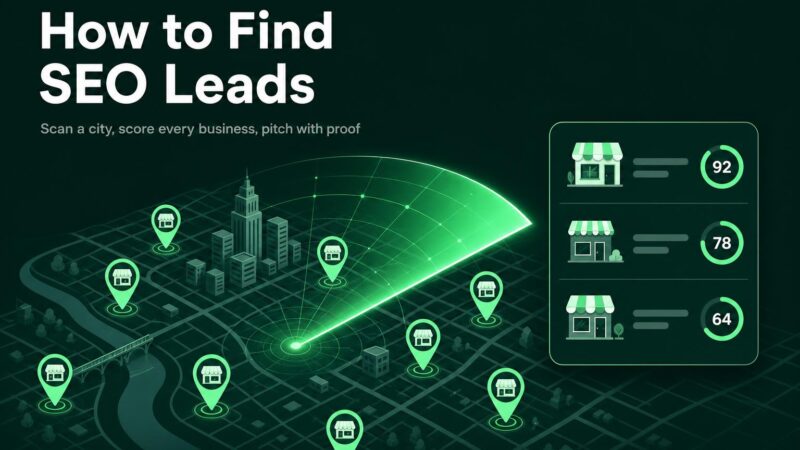
A scan does. Here is what happens between typing a niche and getting a scored list back.
It builds the keywords before it searches
You type a trade and a city. The engine turns that into roughly 25 keyword variations that real customers type, which is not the same as the phrase you would think of first. “Plumbers austin” matters, but so do “emergency plumber austin”, “plumbers reviews austin” and a dozen long tail phrasings with less volume and far less competition.
It then reads the live top 20 organic results for every one of those. Three pages deep, per keyword, because the businesses worth selling to are rarely on page one.
It checks who is already paying
Google Ads transparency data shows which businesses in the market are buying the same clicks they are failing to earn. This is the single most useful signal in the whole scan, and it is worth understanding why: a business running ads has already decided that search traffic is worth money. You are not selling them on the channel. You are showing them they are renting something they could own.
Twelve months of organic traffic history comes in alongside it, so a business that has been sliding since spring reads differently from one that has always been flat.
It asks what the AI assistants say
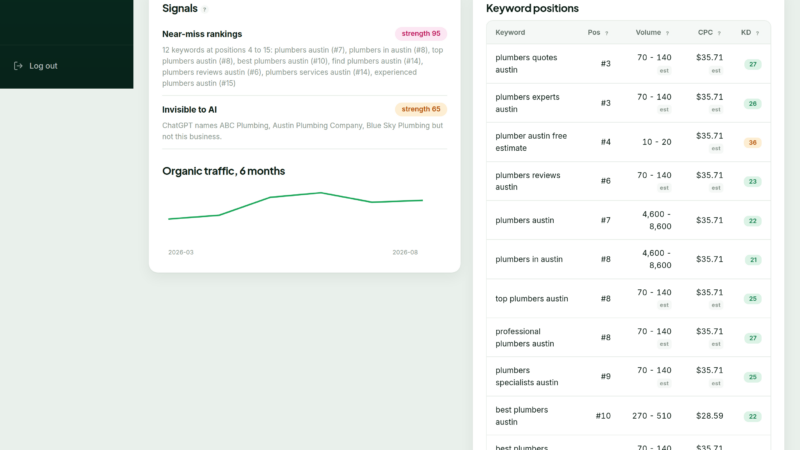
The scan runs a live probe of what ChatGPT answers when somebody asks who to call in that market. Not a cached index, an actual question asked at scan time.
A business can rank respectably and still never be named in that answer, and most agencies are not yet selling against that gap. Worth reading more on in the piece on AI visibility.
Then it scores and filters
Chains, franchises, directories and marketplaces are stripped out, because none of them will sign a local retainer. What survives is scored on need, on the budget signals it is showing, and on how easily you can reach somebody who can say yes.
Cost is one credit per two businesses scored, five credit minimum. An uncapped scan usually surfaces 35 to 40 businesses, so 18 to 20 credits, and you can set a cap if you want a fixed ceiling before you start.
What SEO lead generation software should cost you
Pricing in this category is usually per seat and per month, which has nothing to do with how much work you do. Consumption pricing is more honest for prospecting, because prospecting is bursty: you scan four markets in a planning week and nothing for a fortnight.
The number worth checking before you commit to any tool is the cost of a scan that returns nothing. A market where every business already ranks well is a legitimate and useful answer, and you should not be paying full price to receive it. Here you pay for businesses actually scored, plus a five credit floor, so a healthy market is a cheap answer rather than an expensive disappointment.
Repeat scans read from cache, which matters more than it sounds. Coming back to a market you swept six weeks ago should cost close to nothing, and if it does not, you will stop re-checking markets and your data will quietly go stale.
Choosing a niche worth scanning
The trades that work best share three properties: a high value per customer, a local service area, and owners who already understand that being found matters. Plumbing, HVAC, roofing, dental, legal and med spa all qualify. A single new customer is worth hundreds or thousands, so the arithmetic on a retainer is easy to make.
What does not work as well: businesses with tiny transaction values, businesses that are genuinely national, and any category dominated by franchises. A franchise location usually cannot buy SEO independently even when it wants to, which is why chains and directories are filtered out of results before you see them.
City size is the other variable. Very large metros have deep, well funded competition and the near-miss businesses are harder to help quickly. Secondary cities, the ones with a few hundred thousand people, tend to produce the best ratio of need to winnability.
Reading a scan like somebody who has read a hundred of them
Score first, but only to triage. The score compresses need, budget and reachability into one number, which is useful for sorting and useless for deciding what to say.
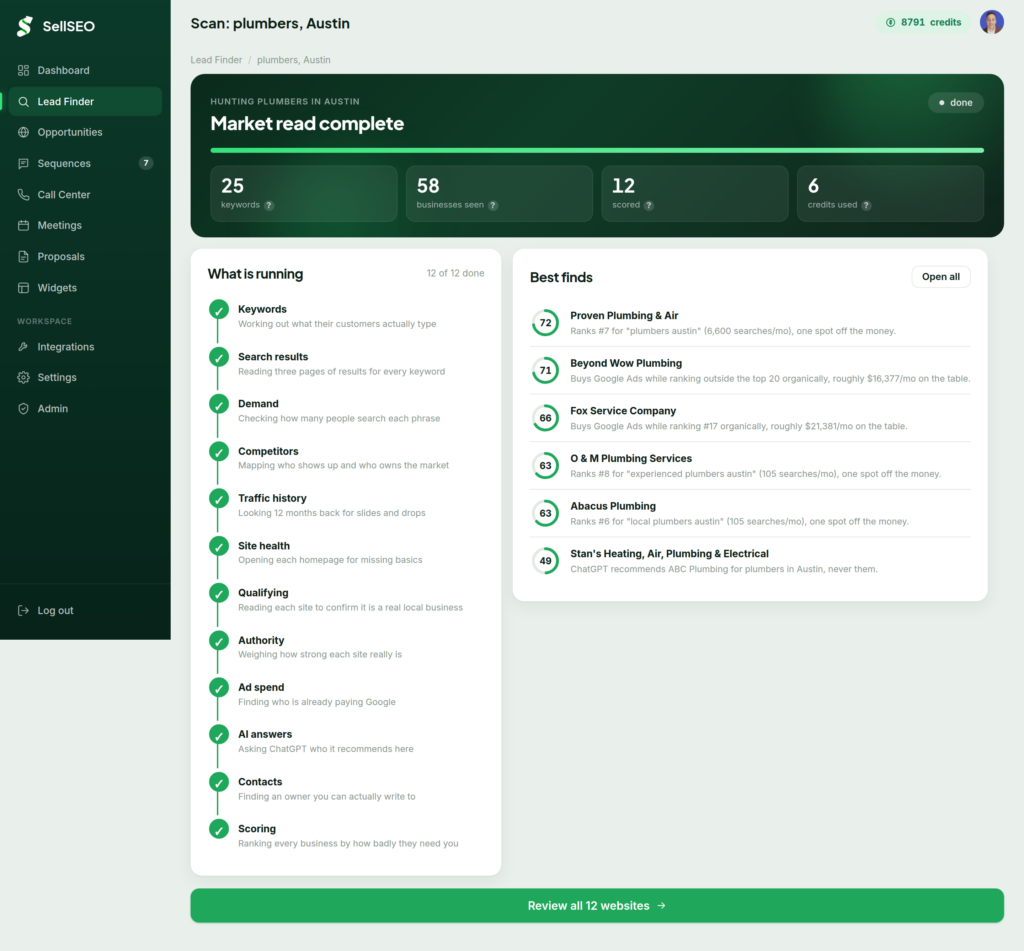
Then read the signal sentence, because it tells you which of three conversations you are about to have. Near-miss rankings is a conversation about a specific page. Buying ads with weak organic is a conversation about money they are already spending. Invisible to AI is a conversation about a channel they may not know exists yet.
Then check reachability before you invest any real effort. A business with a perfect score and no route to a decision maker is not a lead, it is a fact. Sort by score, filter by whether a contact exists, and work what survives both.
Where a scan does not help
It will not tell you whether a business is pleasant to work with, whether they have been burned by an agency before, or whether they have any intention of spending money this quarter. Those things come out on the call, and no amount of data replaces the call.
It also measures a moment. Search results move, and a scan from March describes March. Re-run a market before you work it rather than trusting a list you built last quarter.
Frequently asked questions
What is SEO lead generation software?
It is software that finds businesses with a measurable search problem, rather than simply listing businesses in a category. The distinction matters: a business directory tells you a plumber exists, whereas lead generation software tells you that the plumber ranks seventh for a phrase with 6,600 monthly searches while a competitor takes the traffic, which is the difference between a contact and a reason to make contact.
How long does a scan take to run?
Most finish in about five minutes. The work runs as a queue of small steps rather than one long request, so you can leave the page, start other scans, and come back to a status screen that shows each business as it is discovered and scored.
How many leads does one scan produce?
An uncapped scan usually surfaces 35 to 40 businesses in a typical metro, of which a handful will have strong enough signals to be worth a serious pitch. Treat the rest as inventory rather than a to-do list. Working four prospects properly beats emailing forty badly.
Can I scan markets outside the United States?
Yes, 54 countries across 25 search languages. The search language follows the country automatically, and you can override it for bilingual markets such as Canada, Belgium or the United Arab Emirates where the automatic guess is often wrong.
Will it find businesses I already work with?
Not if you exclude their domains before the scan runs. Chains, franchises, directories, marketplaces and aggregators are filtered out automatically, since none of them can sign a local retainer.
Related reading
- How to Find a Business Owner Email Address That Actually Works
- AI Visibility Tracking: Who ChatGPT Names Instead of Your Prospect
- An SEO Client Pipeline That Updates Itself
- An SEO MCP Server: Running Lead Generation From Claude or ChatGPT
- How to Find SEO Leads That Are Provably Losing Money
See the full feature: Lead Finder.